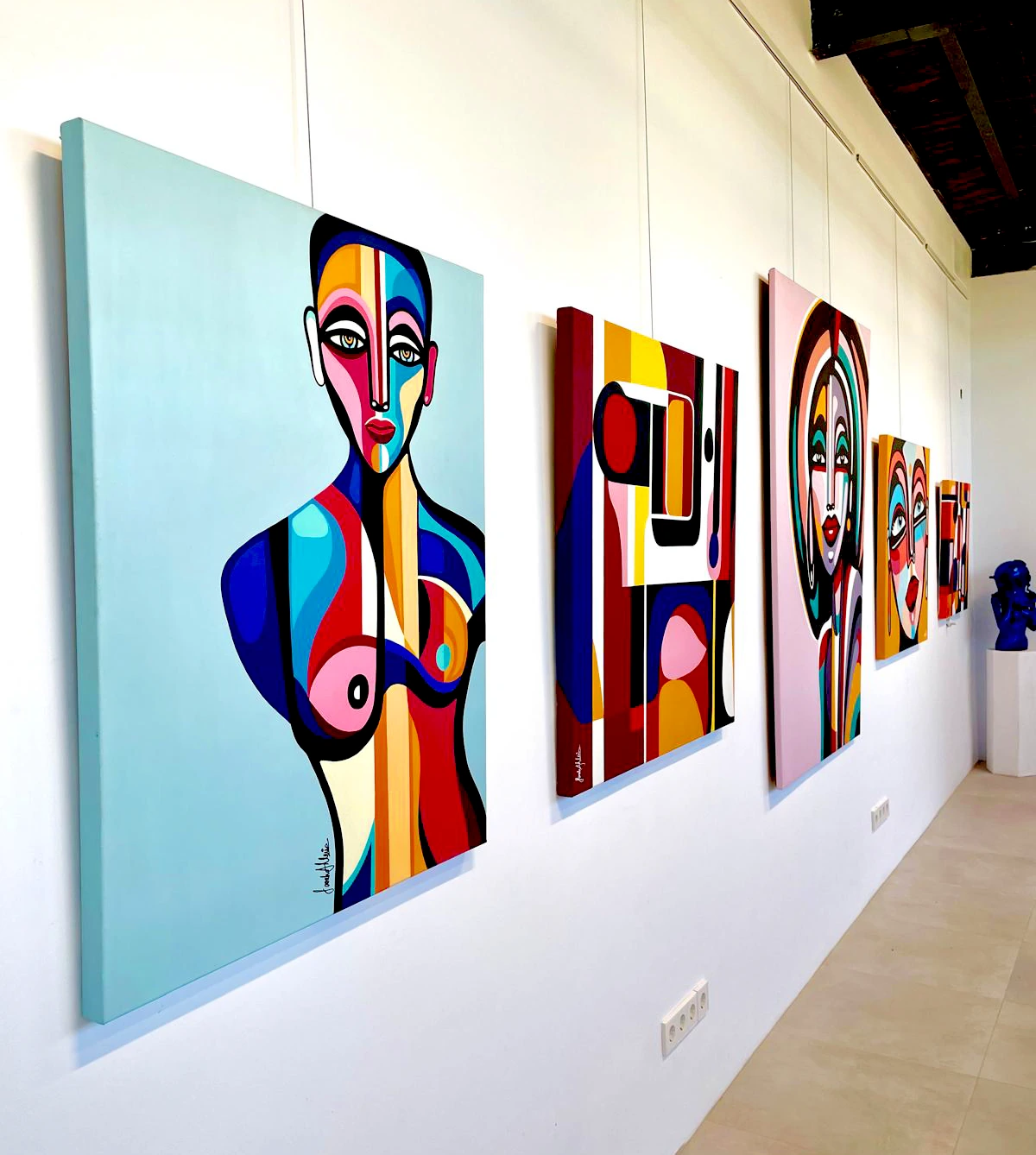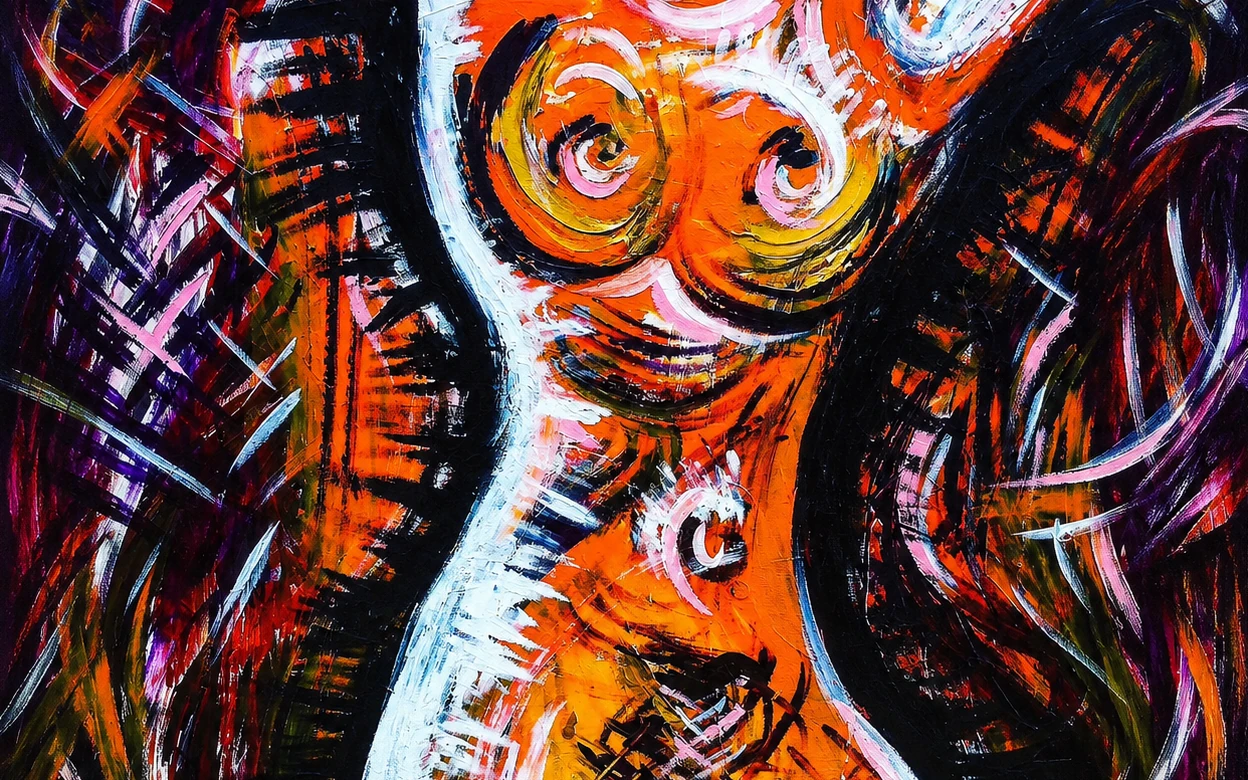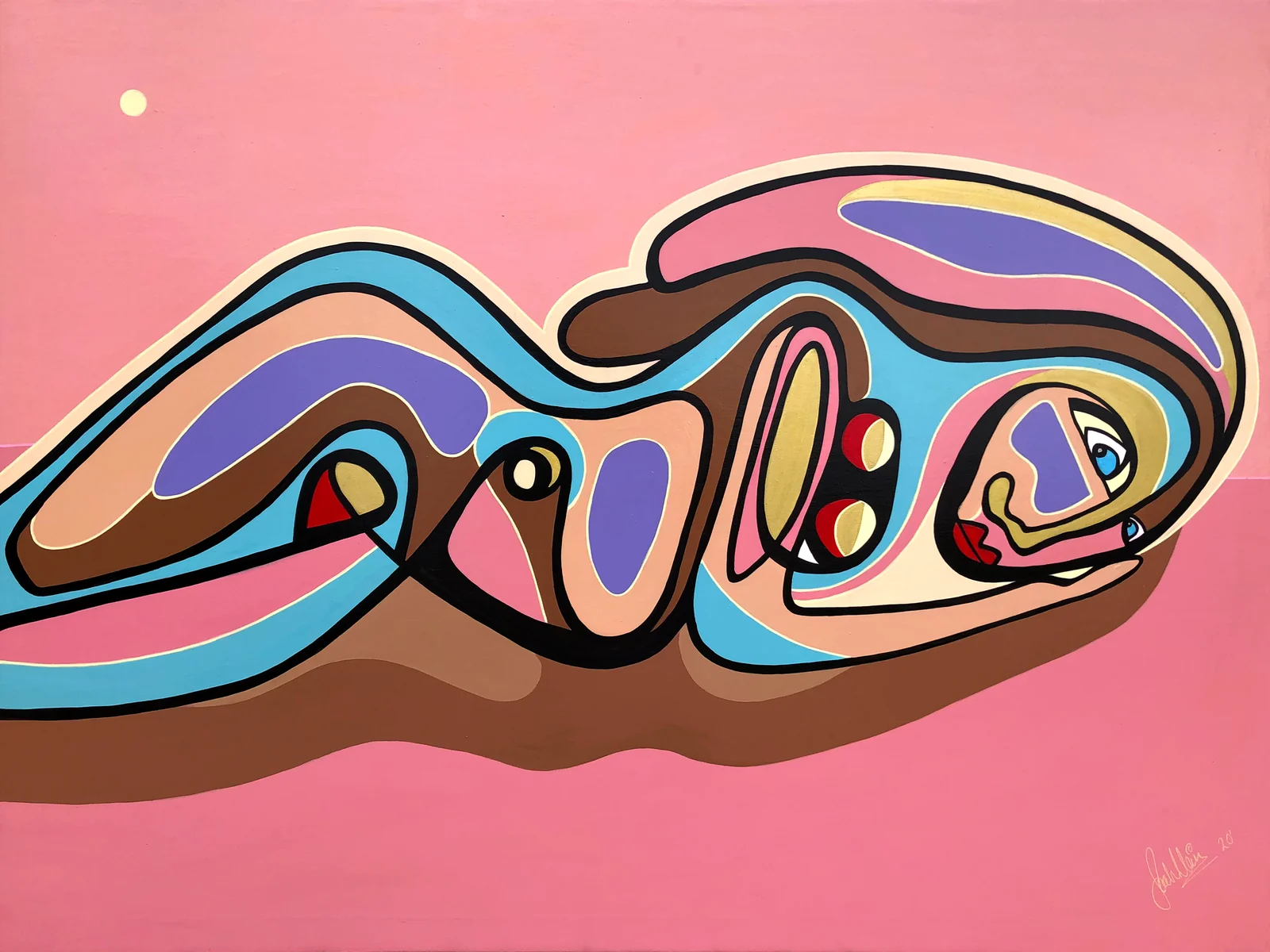
My father was a renowned artist, known for his exceptionally fine hand. There was one question he would always ask when looking at a painting.
"Is there anywhere on the canvas that draws your eye?"
If there was, you needed to resolve it.
I grew up making things with him, following in his footsteps with leatherwork while learning drawing and painting techniques along the way. With several artists in the family, creativity and an appreciation for craftsmanship were part of everyday life. His question became one of the things I learned to look for in my own work.
What I like about the question is that it doesn't prescribe a particular way of making art. It isn't about following rules of composition or working towards a certain style. It asks you to look at what is actually there, and to be honest about how the different elements are working together.
The point that draws your eye might be obvious: a bright colour that dominates everything around it, a line that stops abruptly, or a shape that feels too heavy in one part of the canvas. Other times, it's much harder to identify. You can stand in front of a painting knowing that something isn't quite right without being able to put your finger on it. You move things around, take something away, make an adjustment, and gradually the whole picture begins to settle.
That process can be difficult when you're close to the work. I know how easy it is to become attached to a particular detail because you enjoyed making it, or because it took time to get right. You can spend ages perfecting one small area and then find that it is drawing attention away from everything else. The challenge is recognising when something you like isn't necessarily serving the painting. Sometimes you have to be prepared to change or remove it.
Looking at a piece again with fresh eyes can reveal things that were invisible when I was absorbed in the process. It's a reminder that making the work and looking at the work are two different things. Both matter.
Over the years, I've found myself applying the same thinking well beyond painting. When I'm DJing, I'm listening to how one track sits alongside another. A track can be brilliant on its own, but if it jars with what came before, it can interrupt the flow. The transition matters as much as the individual tracks. You're constantly listening, adjusting and making decisions about what comes next, often in response to how the room is feeling.
In my augmented reality work, I think about the relationship between the painting, animation and sound. Each element brings something to the experience, but none should compete unnecessarily with the others. Timing is important. An animation arriving too early, or sound that doesn't quite belong, can change the way the work is experienced. The aim is to make the different elements feel connected, as though they were always meant to be together.
My father also used to say that it's all about the feeling. I've held on to that just as much as his question about the canvas. The technical decisions, the details and the adjustments are important, but they're not the reason for making the work. What matters in the end is the feeling it leaves with someone. I think the two ideas are connected: the feeling is what you're trying to create, and looking carefully at the work helps you protect it.
I still ask his question whenever I step back from a canvas. I hear it in my head, usually when I think I'm finished, which is often when I need it most. It has become part of how I work, and probably part of how I see things more generally.
Some days I wish I could stop. Mostly, I'm grateful I can't.